Showing posts with label nestling. Show all posts

Friday, April 1, 2011

Baby birds are strange


Actual scientific drawing from Saunders (1956)

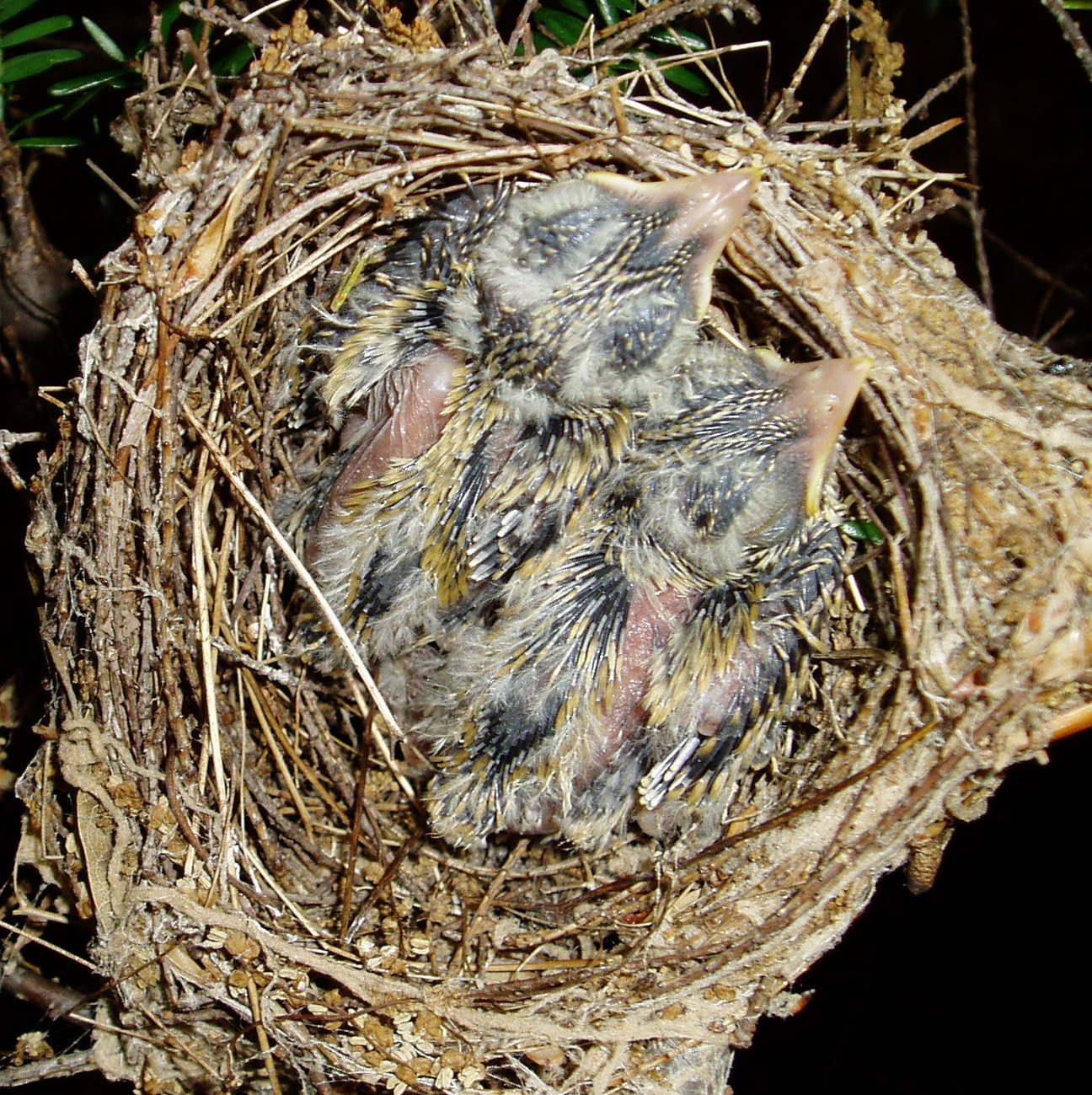
Very strange indeed. It seems like the random tufts of fuzz on newly hatched chicks are just for decoration. What other purpose could they serve? Warmth? It does look warm, but there's not enough of it. There are apparently names for each little patch, too. I came across a 1956 paper in the journal Bird Banding (by Aretas Saunders) that describes the fuzz from several species, and gives names to each fuzz patch. I don't necessarily see the corresponding patches on the nestling photos that I have (see below), but maybe it varies by species (the drawing is of a chipping sparrow). Maybe I should actually read the article. Here are the patches (refer to numbers on the cute yet scientific drawing above):


1. coronal      } capital
2. occipital     }  tract
3. dorsal
4. humeral
5. femoral
6. caudal
7. secondary   }  alar
8. primary       }  tract
9. crural
10. abdominal  } abdominal
11. lateral        }     tract

Here are some pics of alien nestlings from my files:

 Acadian flycatcher
eastern meadowlark

blue grosbeak

 grasshopper sparrow

field sparrow

Lit cited
Saunders, A. A. 1956. Descriptions of newly-hatched passerine birds. Bird Banding 27:121-128.


Thursday, November 11, 2010

They grow up fast

Once upon a time, I was an Acadian flycatcher nest-finder.

A few nests (out of around 150) were really low and easy to photograph. These were fun to follow, and made you realize how amazingly fast birds grow up: from egg to fully feathered fledgling in about 14 days. (This is actually nothing compared with grasshopper sparrows and their grass-dwelling ilk, which fledge in only 8-9 days!)

Here is one Acadian flycatcher nest I documented (almost) daily...


Day 0 - Hatch day. Tiny, fuzzy, and blind.

Day 0 - Later in the day. Last egg hatched, but looks a little runty.

Day 1 - Skin has gotten a little less orange and more pink. Little Runty's fuzz has dried, but he is still noticeably smaller.

Day 2 - Tiny pin feather pins visible beneath skin on back and head. Little Runty is not looking too good.

Day 3 - Pin feathers have broken the skin. Little Runty looks larger, but is dead or nearing death.

Day 4 - Pin feathers nicely developed. Little Runty seems to have died (he's visible underneath bottom nestling).

Day 5 - Feather plumes beginning to emerge from pin feather sheaths. Little Runty appears to be gone - removed by parents?

Day 6 - Feathers covering up much of the skin between feather tracts.

Day 7 - Looking rather furry. Just a little skin visible.
Day 8 - No skin visible. All feathered, but still a little pin-feathery looking. And more golden colored than gray (due to feather tips).

Day 10 - Fully feathered, gray plumage with cream-colored wing bars. Alert and getting wary of visitors. Only 4 days left until fledging, and 2 days before they can jump ship if disturbed. Sadly these guys were eaten by predators later this day or overnight.

Day 11 - Here is another nest with 3 nestlings, 11 days old. Getting pretty crowded! Only three more days left like this.


I don't have any photos of older nests because they get pretty skittish after 10 days. But here are some of adults to complete the cycle: